

By the scanO editorial team. Updated September 2026.
Quick answer: A basic dental equipment list for a new single-chair clinic covers six groups: operatory equipment (dental chair unit, operator stool, air compressor, suction, handpieces), imaging (intraoral X-ray unit and RVG sensor), sterilization (autoclave, ultrasonic cleaner, pouch sealer), procedure equipment (ultrasonic scaler, LED curing light, apex locator, endomotor), hand instruments, and patient communication tools (intraoral camera, and optionally an intraoral scanner or AI screening device). Add biomedical waste bins and power backup, and complete AERB formalities before using any X-ray unit.
Equipment decisions shape your clinic's cash flow for years. Buy too little and you refer out work you could do; buy too much and expensive machines sit idle. This dental equipment list gives each item's name, what it does and how essential it is for a typical general practice. For prices, follow the links to our detailed guides.
The table below is written for a single-chair general dental practice in India. A specialist practice (orthodontics, implants, pediatric dentistry) will change the priorities.
Equipment nameWhat it doesPriority for a single-chair GP clinicDental chair unitPatient chair with delivery system, spittoon, light and foot controlEssentialOperator stoolAdjustable seat for the dentist (and assistant)EssentialAir compressor (oil-free)Supplies compressed air to the chair and handpiecesEssentialSuction unitHigh-volume and saliva suctionEssentialAirotor (high-speed handpiece)Cutting tooth structure and removing restorationsEssentialMicromotor or low-speed handpiecePolishing, finishing, caries removal, lab workEssentialUltrasonic scalerRemoving calculus and stainsEssentialLED curing lightSetting light-cured composites and cementsEssentialIntraoral X-ray unitTaking periapical and bitewing radiographsEssential for most clinicsRVG sensor (digital radiography)Captures intraoral X-ray images digitallyRecommendedApex locatorMeasures root canal working length electronicallyRecommendedEndomotorRotary root canal instrumentationRecommendedAutoclave (Class B or equivalent)Sterilizing instruments with steamEssentialUltrasonic cleanerCleaning instruments before sterilizationRecommendedPouch sealerSealing sterilization pouchesRecommendedIntraoral cameraShowing patients their own teeth on screenRecommendedIntraoral scannerDigital impressions for crowns, aligners and implantsOptional (depends on case mix)OPG (panoramic X-ray)Full-mouth panoramic radiographsOptional for a new GP clinicCBCT3D imaging for implants, endo and surgeryOptional (specialist or referral)AI screening deviceSelf-service intraoral photo capture and visual screening reportsOptional (patient communication and camps)Biomedical waste bins and containersColor-coded segregation of clinical wasteEssential (legal requirement)Power backup (inverter or UPS)Keeps chair, compressor and computers running during outagesRecommended
Use this list as a planning checklist, not a shopping list. The sections below explain each group.
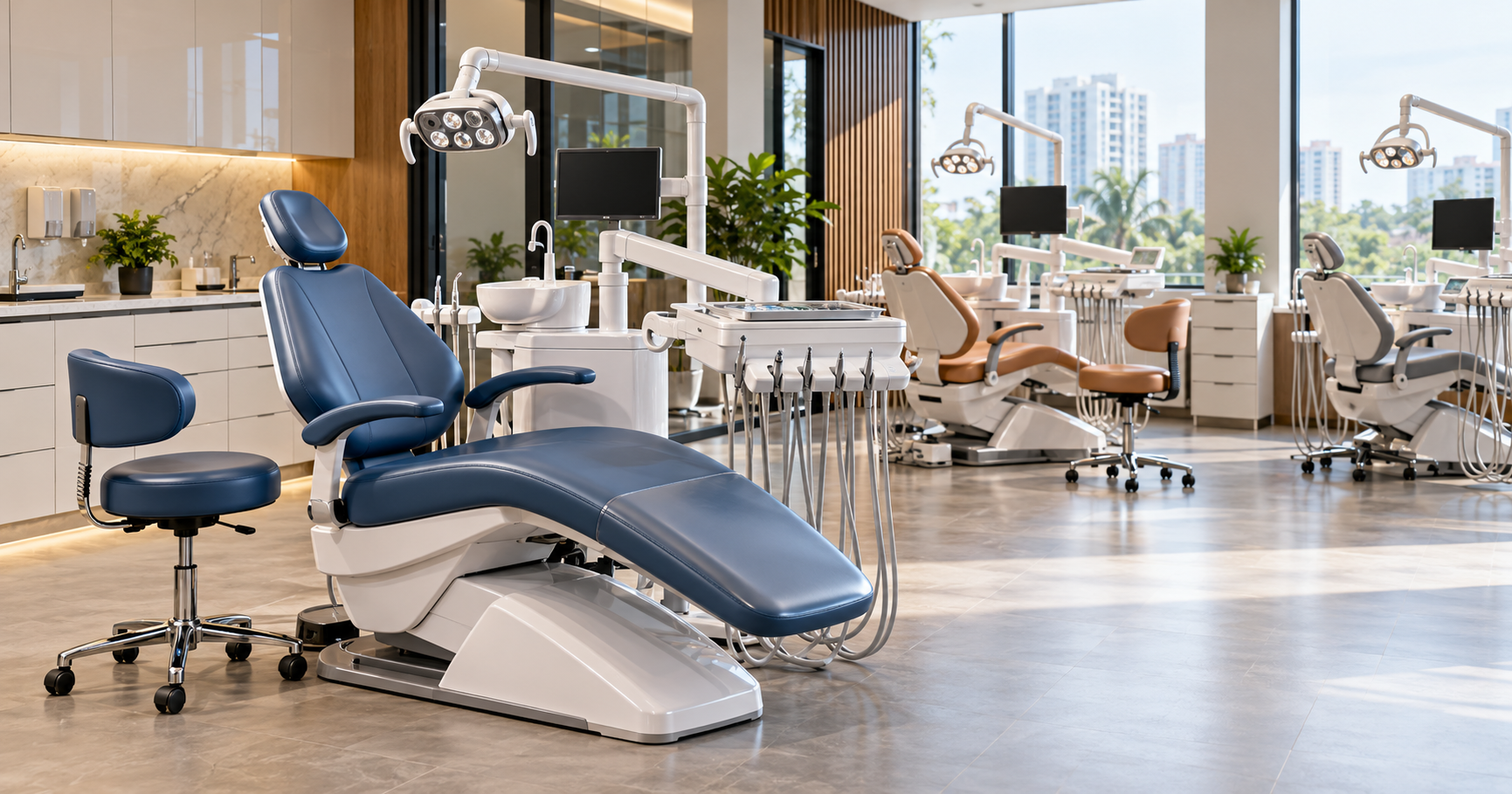
The operatory is where most of your budget goes. The core items are:
Many dental chair packages sold in India bundle some of these items. Ask exactly what is included, especially compressor, suction, stool and handpieces.
Radiographs are diagnostic tools, and most general practices need intraoral imaging from day one.
Every medical diagnostic X-ray installation in India comes under the Atomic Energy Regulatory Board (AERB). The employer must procure type-approved equipment from authorized suppliers and obtain the required permissions and license through AERB's e-LORA portal, and periodic quality assurance testing is required (AERB e-LORA guidelines). Our dental X-ray machine and RVG price guide covers listed prices and the AERB steps in detail.
Sterilization is non-negotiable, and patients increasingly notice it. A basic sterilization area needs:
Personal protective equipment (gloves, masks, eyewear, face shields, gowns) and surface disinfectants are consumables, but budget for them from the start.
Beyond the chair and sterilization, a general practice usually adds:
Hand instruments are the foundation of every procedure. A starter set includes:
Instrument groupCommon namesDiagnosticMouth mirror, explorer (probe), periodontal probe, tweezersRestorativeSpoon excavator, plastic filling instrument, condensers, burnishers, carvers, matrix retainersPeriodontalSickle scalers, curettesSurgicalExtraction forceps (upper and lower sets), elevators, periosteal elevator, needle holder, scissorsEndodonticEndo files, reamers, spreaders, pluggers, endo gauge, rubber dam kitAnesthesiaAspirating syringe, needlesMiscellaneousBur stand, cheek retractors, bite blocks, impression trays
Buy enough of each diagnostic and frequently used instrument to cover your patient load plus sterilization time.
This is the group that has changed most in recent years. None of these replace your clinical examination or radiographs, but they change how patients see and understand their oral health.
Buying everything on day one is the most common way to overspend. Use a phased plan.
PhaseWhenTypical itemsPhase 1: Open the doorsBefore openingChair unit, stool, compressor, suction, handpieces, scaler, curing light, intraoral X-ray (with AERB compliance), autoclave, instruments, biomedical waste setupPhase 2: Strengthen core workFirst 3 to 12 monthsRVG sensor (if you started with film), apex locator, endomotor, ultrasonic cleaner, pouch sealer, intraoral cameraPhase 3: Match your case mixWhen volume or referrals justifySecond chair, OPG, intraoral scanner, CBCT access, laser, implant motor, AI screening for reception or camps
For a full budget, including premises, interiors and staff, see our guide to dental clinic setup cost in India.
Use this checklist for every major purchase.
India has domestic manufacturers across chairs, compressors, autoclaves, instruments and consumables, alongside distributors for international brands. To shortlist suppliers:
scanO is not affiliated with any equipment manufacturer or brand. Confirm specifications, regulatory status and prices with authorized dealers.
This is a hypothetical example for illustration, not a real clinic.
A young general dentist opens a single-chair clinic in a tier-2 city. In Phase 1 she buys a mid-range chair unit with compressor and suction, two airotors, one micromotor, a scaler, a curing light, a wall-mounted intraoral X-ray unit with RVG sensor, an autoclave, and instrument sets for her expected daily patients. She completes AERB registration and licensing before taking the first radiograph and signs up with the local biomedical waste facility.
In Phase 2, after steady endodontic referrals, she adds an apex locator, an endomotor and an intraoral camera. She refers OPGs to a nearby imaging center. In Phase 3, when she starts running school and workplace camps, she evaluates an AI screening device for camps and reception rather than a second chair, because her bottleneck is screening and patient education, not chair time.
AI screening is a newer line item. It is not an imaging device and does not replace anything above, so list it under patient communication next to the intraoral camera, not under diagnostics. scanO air is one example: it uses intraoral images to create a visual screening report that patients can follow, which suits reception and camp settings. Examination, radiographs, diagnosis and treatment planning remain the dentist's responsibility. Collect patient consent and handle all screening data under India's Digital Personal Data Protection Act, 2023.
A basic dental clinic needs a dental chair unit, operator stool, air compressor, suction, high-speed and low-speed handpieces, an ultrasonic scaler, an LED curing light, an intraoral X-ray unit, an autoclave, hand instruments and biomedical waste bins. An RVG sensor, apex locator, endomotor and intraoral camera are common next additions.
Common dental instruments include the mouth mirror, explorer, periodontal probe, tweezers, spoon excavator, plastic filling instrument, condensers, carvers, scalers, curettes, extraction forceps, elevators and endodontic files.
Not always. Many new general practices start with an intraoral X-ray unit and RVG sensor and refer panoramic imaging to a nearby center. An OPG makes sense when your case mix and referral volume justify the cost and the AERB licensing work.
Yes. Dental X-ray installations in India come under AERB. You must procure type-approved equipment from authorized suppliers and complete the required permissions and licensing through the e-LORA portal before use, with periodic quality assurance testing.
Dental trade shows, authorized dealer networks and online dental marketplaces are the main routes. Always check regulatory documentation, service support and installed references before buying high-value equipment.
No. An AI screening device is optional. It supports patient communication and screening at reception or in camps, but it does not replace clinical examination, radiographs or any core treatment equipment.
Building your equipment plan? See how scanO air fits your clinic's screening and patient communication workflow alongside your core equipment on the scanO air product page.