


By the scanO editorial team. Updated September 2026.
Quick answer: The main dental chair parts start with the base and lift mechanism. Next comes the patient chair (seat, backrest, headrest and armrests) and the foot control. The doctor's delivery system holds the handpiece tubings and a three-way syringe. The assistant's side has the instrument holder and suction. The unit also has a cuspidor (spittoon) with cup filler, an operating light and utility links for water, air, suction and power. A compressor, a suction unit and the operator's stool work alongside the chair. Each part is explained below with its function and common wear signs.
Knowing what each part of a dentist chair does helps your team run it properly, spot problems early and talk clearly with service engineers. This guide groups the parts by zone, the way you actually use the chair.
A modern dental chair is really a dental unit: the patient chair plus the equipment built around it. The international standard ISO 7494-1:2018 covers "stationary dental units, dental patient chairs, and combinations thereof". It notes that operator's stools and operating lights fall outside its scope (ISO 7494-1:2018).
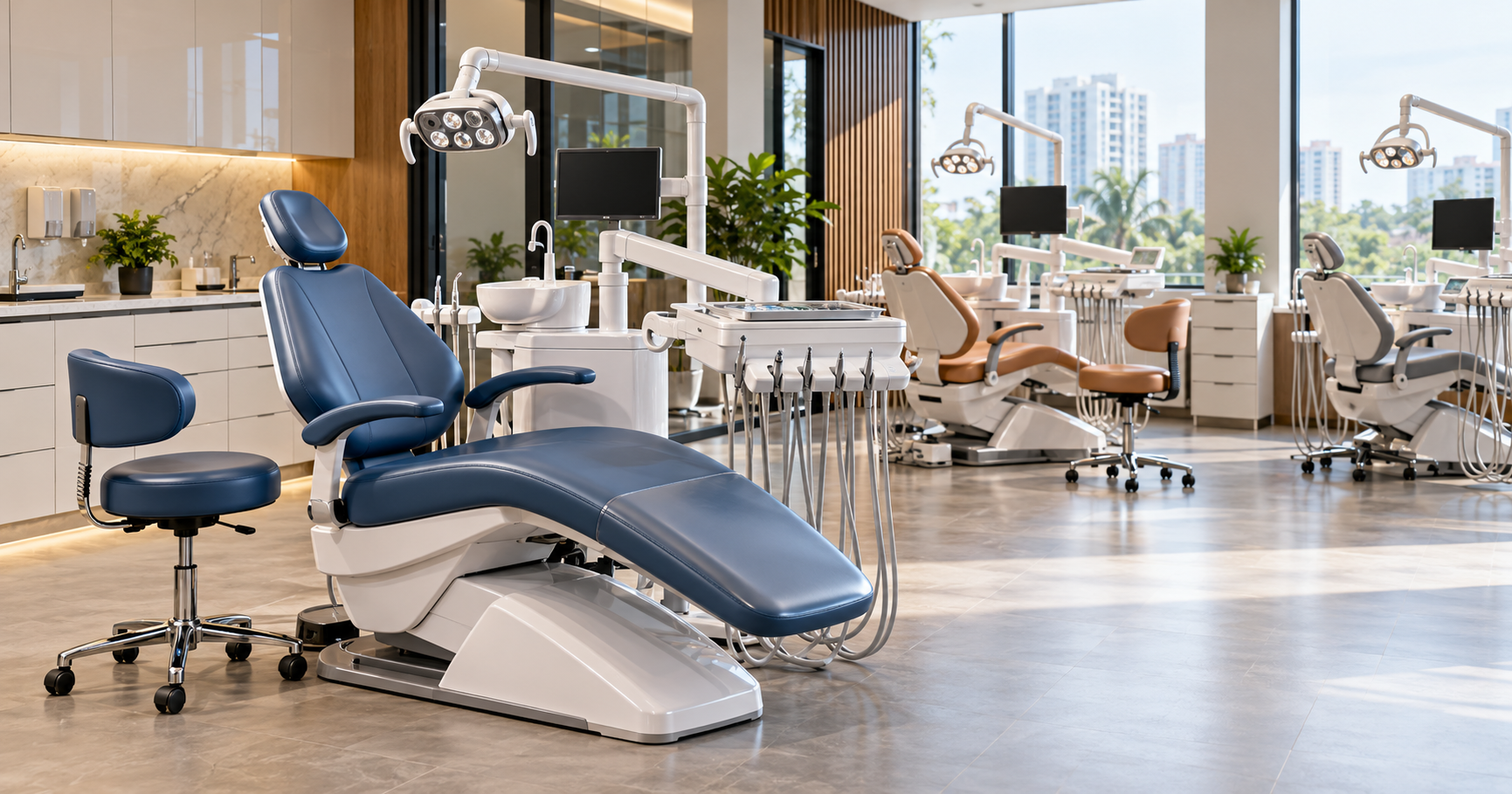
A dental chair diagram is easiest to read in four labeled zones. Each zone groups the parts one person uses.
PartFunctionCommon wear signsBaseAnchors the chair and houses the lift mechanismWobble, oil stains (hydraulic models), loose floor boltsLift mechanism (hydraulic pump or electromechanical actuator)Raises and lowers the chairSlow or jerky movement, noise, drifting downSeatSupports the patient's bodySagging foam, cracked seamsBackrestReclines the patient for access to the mouthStalling mid-recline, clickingHeadrestPositions the patient's head for upper or lower arch accessLoose locking lever, slipping angleArmrestsPatient comfort and safe entry and exitLoose fixingsUpholsteryCushioning and a cleanable surfaceCracks or tears that trap contaminationFoot controlHands-free control of chair movement, programs and often handpiecesIntermittent response, cracked housing, damaged cable
Electric chairs usually have programmable positions, so one tap on the foot control moves the patient to a saved working position and back to the entry position.
The delivery system brings instruments within the dentist's reach. It is described by where it sits relative to the patient.
PartFunctionCommon wear signsDoctor's unit and control panelHolds instruments; controls chair, water and handpiece settingsUnresponsive buttons, display faultsAir turbine tubingSupplies drive air and coolant water to high-speed handpiecesCracks, leaks at the connector, weak sprayMicromotorDrives low-speed handpieces for polishing and finishingOverheating, speed fluctuationThree-way syringeDelivers air, water or spray to dry or rinse the fieldSputtering, leaking tipUltrasonic scalerRemoves calculus using vibration and waterWeak vibration, poor water flowInstrument trayHolds instruments during treatmentLoose arm, tray drops
PartFunctionCommon wear signsAssistant's instrument holderHolds suction tips and the assistant's syringeHolder arm will not stay in placeHigh-volume evacuator (HVE)Removes water, debris and aerosol from the mouthWeak suction, blocked tubingSaliva ejectorLow-volume suction for salivaWeak flow, clogged filterCuspidor (spittoon)Lets the patient rinse and spitSlow drain, stains, cracksCup filler and bowl rinseFills the rinse cup and flushes the bowlOverflow, no flow, leaks
The junction box (utility box) at the base connects the chair to the clinic's water, air, drain, suction and power lines. Many units also have a bottle system so the treatment water can be supplied from a separate reservoir.
Waterlines need regular care. The US Centers for Disease Control and Prevention recommends that clinics ask the dental unit manufacturer how to maintain water quality. It also advises clinics to discharge water and air for at least 20 to 30 seconds after each patient from any device that enters the patient's mouth (CDC, Dental Unit Water Quality).
These usually sit outside the operatory. The compressor supplies clean, dry air for handpieces and the syringe. The suction unit powers the HVE and saliva ejector. They are often quoted separately from the chair.
The operating light illuminates the mouth. LED lights are common on newer chairs. Some lights filter blue wavelengths to reduce premature curing of composite resin during placement.
The dentist's and assistant's stools are part of the working system even though they are separate items. Stool height and back support affect posture through a long clinic day.
Keep this list with your equipment file. Replacement intervals depend on use and the manufacturer's instructions for use (IFU), so we have not assigned fixed timelines.
Spare partWhy it is replacedWho should replace itHandpiece tubing and connectorsCracks, leaks, loss of pressureTrained staff or service engineerO-rings and sealsLeaks at handpiece and syringe connectionsTrained staffThree-way syringe tipsWear, blockage, infection controlStaffSuction filters and trapsBlockage, hygieneStaffAir and water filtersContamination, pressure dropService engineer or trained staffFoot controlIntermittent response, physical damageService engineerUpholstery setCracks that cannot be disinfectedService engineer or upholstererLight bulb or LED moduleFailure or reduced brightnessService engineerSolenoid valvesWater or air not switching correctlyService engineerControl board (PCB)Electronic faults, erratic movementService engineerHydraulic pump or actuator motorLift failureService engineerCuspidor bowl and drain partsCracks, blockageService engineer
If you are assessing an older chair before buying, our second-hand dental chair inspection checklist turns these parts into pass and fail checks.
Print this for your team. Always follow the manufacturer's IFU for products and methods.
New assistants often learn the chair by name first. A simple left-to-right walk-through works well. Name each part in this order: base and junction box, foot control, patient chair (seat, backrest, headrest, armrests), doctor's unit (tubings, syringe, scaler, panel), assistant's side (HVE, saliva ejector, syringe), cuspidor and cup filler, operating light, stools. You can print this list and keep it in your induction file.
For the rest of the equipment a clinic needs beyond the chair, see our dental equipment list with names. If you are pricing a new unit, our dental chair price guide covers costs by type and brand. To shortlist makers, see our comparison of the best dental chair brands in India.
Chairside equipment works best when patients also understand what the team is seeing. scanO air adds a visual step before the chair, capturing intraoral images and turning them into a report the patient can follow while the team explains the next step. It does not replace a clinical examination, diagnosis, radiographs, or treatment planning, which remain the dentist's responsibility. See how scanO air works chairside.
The patient chair parts are the base and lift mechanism, seat, backrest, headrest, armrests, upholstery and foot control. Around it sit the doctor's delivery system with handpiece tubings and a three-way syringe, assistant's instrument holder with suction, cuspidor with cup filler, operating light and the junction box for utilities. A compressor, suction unit and stools support the chair.
The foot control lets the dentist move the chair, recall programmed positions and often run handpieces without using their hands. This keeps hands free and clean during treatment.
In an overhanging (over-the-patient) system, instruments sit on an arm above the patient's chest. In an underhanging system, the handpiece tubings hang down from the doctor's unit. The choice depends on working style and operatory layout.
The cuspidor is the spittoon bowl where the patient rinses and spits. It usually includes a cup filler and a bowl rinse, and connects to the drain through the junction box.
Parts in regular contact with water, air and patients need attention most often. These include tubing, O-rings and seals, syringe tips and suction filters. Follow the manufacturer's instructions for replacement intervals.
Follow the dental unit manufacturer's instructions. CDC guidance also recommends discharging water and air for at least 20 to 30 seconds after each patient from any device that enters the patient's mouth.
Curious how AI fits alongside your chair? Read our guide to AI dental screening and explore how AI-assisted screening can fit into a modern dental workflow.