

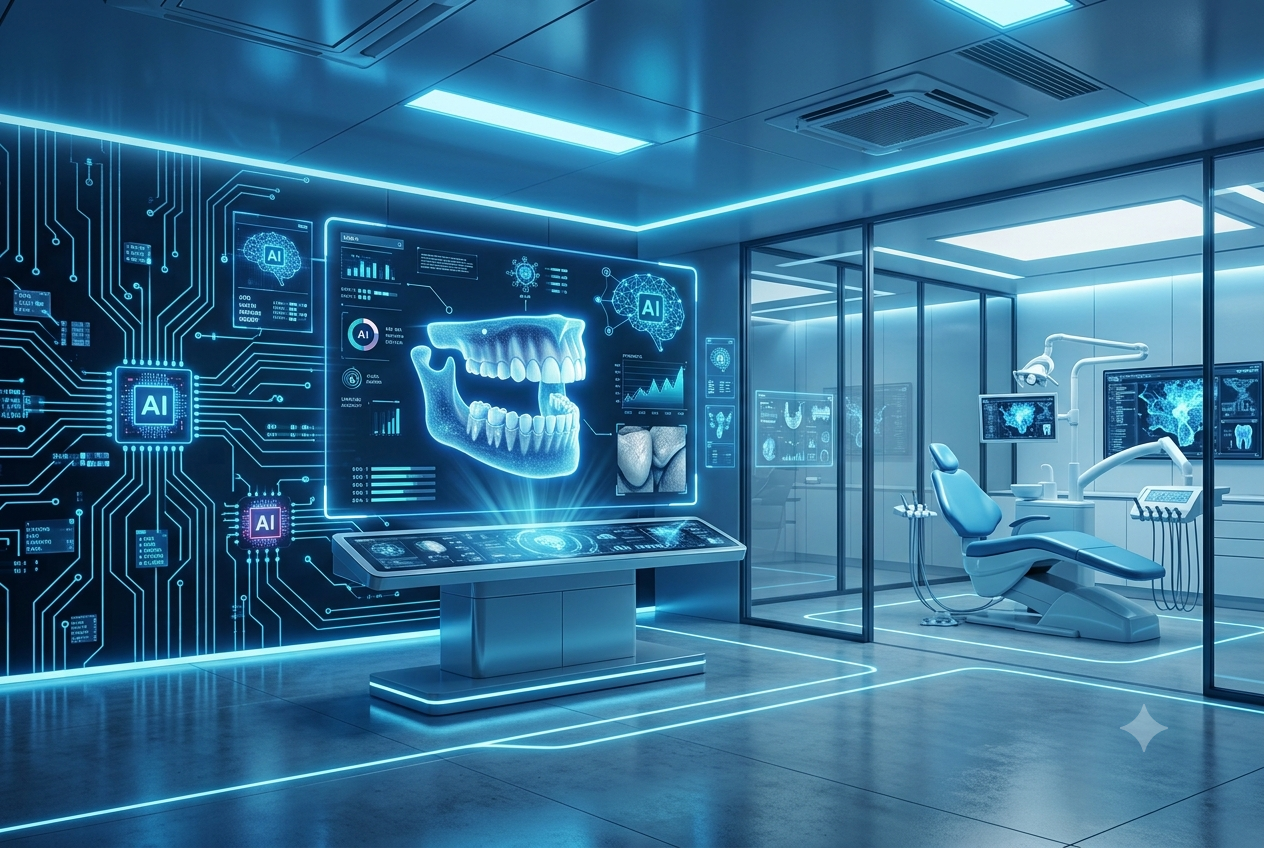
The methods by which dental clinics operate have undergone significant transformation throughout recent decades.
Physical files have been moved to digital cloud systems where artificial intelligence manages the organization of time and communication tasks. Because modern technology exists, dental software becomes a requirement rather than a choice for practitioners in 2026.
Experts claim that dental software serves as a method for organizing files of individuals seeking treatment, scheduling appointments, and financial payments. Through one central location, treatment planning and communication are managed by dental software. Daily activities are simplified because dental software improves the way individuals receive help while total output increases.
Selecting an inappropriate digital tool creates a situation where a medical professional loses a high amount of money. Working efficiency is reduced by dental software that lacks proper connections.
This document outlines the primary characteristics of modern dental software while comparing different options to ensure the best working position is supported.
Practice Management Software (PMS) represents a collection of operational tools that assist with clinical and administrative duties. It has been observed that Practice Management Software (PMS) assists dental practitioners to convert patient records into digital formats. Experts claim that dental software organizes medical treatment schedules and monitors monetary earnings for the dental clinics. Patient communication is organized through dental software because dental software coordinates all messages and treatment planning.
Traditional on-premise dental software usually stays on local hardware within the medical building. Many people believe that on-premise dental software requires annual updates and technical care from workers. Because the year is 2026, many dental clinics have transitioned toward cloud options to remove the necessity for server upkeep. Significant organizations continue using the on-premise model because security and data growth are managed better through this specific method.
Cloud-native platforms provide:
• Secure remote access
• Automatic software updates
• Lower infrastructure costs
• Faster implementation
• Improved disaster recovery
• Easier multi-location management
For most growing practices, cloud software offers greater flexibility and scalability.
Selecting software should never depend on price alone. Instead, clinics should evaluate the features that directly improve patient care and operational efficiency.
Modern systems include advanced clinical tools that simplify diagnosis and treatment planning.
Interactive graphical charting allows dentists to record restorations, missing teeth, periodontal conditions, and treatment history with greater accuracy.
High-quality digital platforms connect with digital X-rays, CBCT scanners, intraoral cameras, and PACS systems. Medical professionals gain access to these images without moving between different computer programs because the connection is direct. A faster workflow is achieved through this technological union.
Electronic Health Records (EHR)
It stores the medical history, prescriptions, treatment notes, consent forms, radiographs, and progress tracking in a single protected spot. Electronic logs make sure the health history of the individual is always ready. Patient information is guarded by the software so that privacy remains high.
Artificial intelligence scheduling stops time conflicts and organizes the empty spots when people cancel their visits. Experts claim that the machine logic fills the open hours automatically so the clinic stays busy. Because the software watches the clock, the medical professionals do not wait for people.
Messages sent through cellular phones and electronic mail stop the problem of people missing their times. Patient engagement is lifted while the communication becomes better. It is observed that reminders keep the relationship between the clinic and the community strong. Higher attendance is produced by these simple messages. SCANO Engage, a key component of the Scano AI, enhances patient communication through automated recalls, appointment management, treatment tracking, and digital engagement tools.
Insurance Claims - Modern digital software sends the payment requests to the companies and watches for the approval of the funds. Billing errors are made smaller because the computer verifies every number. Many people believe that clear money tracking keeps the business healthy.
Electronic Billing - Allows the clinic to send the costs to the people through the internet.
Integrated payment systems simplify invoicing while supporting multiple payment methods.
Real-time analytics allow practice owners to monitor:
• Revenue
• Case acceptance
• Appointment utilization
• Patient retention
These insights support better business decisions.
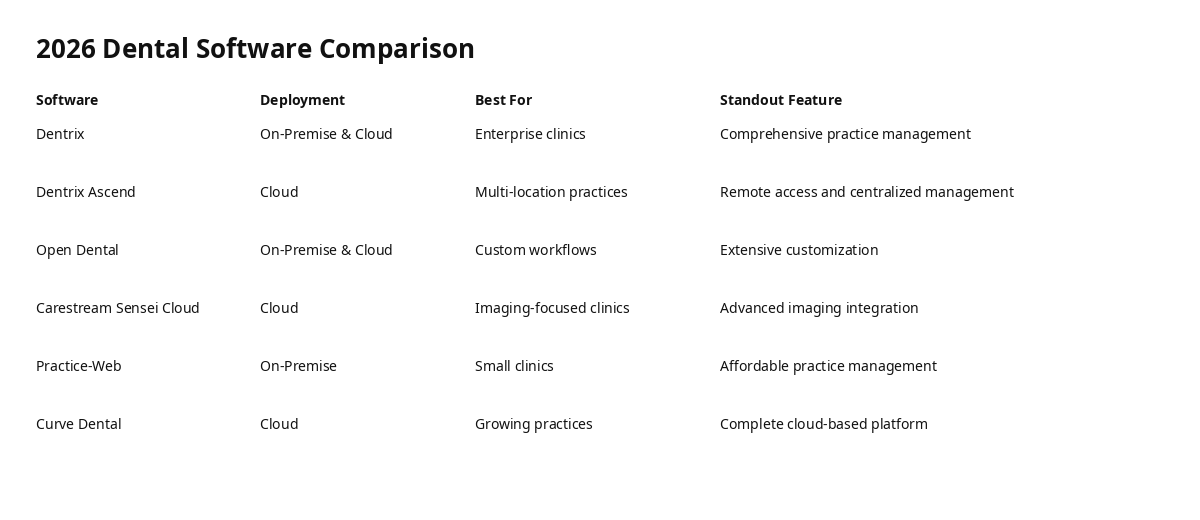
Different clinics have different requirements. The following platforms continue to be among the most recognized options.
An AI-powered practice management platform designed to streamline clinical and administrative workflows for modern dental clinics. It combines patient records, appointments, billing, treatment planning, and AI-driven insights into a single cloud-based system, helping dentists deliver efficient, data-driven care.
These platforms remain popular among medium and large dental organizations.
Best for:
• Multi-location practices
• Enterprise clinics
• Large administrative teams
Key strengths include extensive reporting, insurance management, scheduling, and broad third-party integrations.
Open Dental is highly customizable and appeals to clinics seeking greater flexibility.
Best for:
• Technology-focused practices
• Clinics requiring workflow customization
• Budget-conscious organizations
Its open architecture allows extensive customization and integration with numerous imaging and communication systems.
Carestream is known for its advanced imaging capabilities.
Best for:
• Imaging-intensive practices
• Specialists
• Clinics using digital radiography
Its integration with imaging devices makes diagnosis and treatment planning more efficient.
Practice-Web and Curve Dental
These platforms offer excellent value for small and growing practices.
Best for:
• Solo practitioners
• Start-up clinics
• Growing dental offices
Their cloud-first approach makes deployment simple while reducing IT maintenance.
Several dental software providers dominate the industry because they have built large user communities and extensive integration networks.
Popular solutions often benefit from:
• Established customer support
• Experienced implementation teams
• Wide availability of trained staff
• Strong integration with third-party applications
• Frequent feature updates
However, popularity alone should not determine your decision.
Choosing software that aligns with your workflow is often more valuable than selecting the biggest brand.
Begin by evaluating your clinic.
Questions to consider include:
• How many providers use the system?
• Will the clinic expand?
• Do you require specialty workflows?
• Is remote access important?
• Will multiple locations share patient records?
The right software should support your future growth rather than your current size alone.
Monthly subscription fees rarely represent the complete investment.
Additional costs may include:
• Data migration
• Staff training
• Hardware replacement
• Imaging integration
• Software customization
• Technical support
• Implementation services
Understanding the full cost prevents unexpected expenses after deployment.
Patient information requires strong protection.
Look for software offering:
• Data encryption
• Automatic cloud backups
• Multi-factor authentication
• Role-based access control
• Audit trails
• HIPAA-compliant security measures
• Regular security updates
Strong cybersecurity protects both patient trust and business continuity.
Although prominent platforms like Dentrix, Open Dental, Carestream Dental, Practice-Web, and Curve Dental provide specific advantages, the ideal dental software is determined by the dimensions of the medical office, the sequence of tasks, the financial plan, and future objectives. Experts claim that the selection of dental software requires careful consideration of these factors. A dental software which is selected with caution will boost productivity because the satisfaction of the visitors is increased by this dental software. A firm base for lasting expansion in 2026 and later years is created when the dental software is integrated correctly.