
.png)

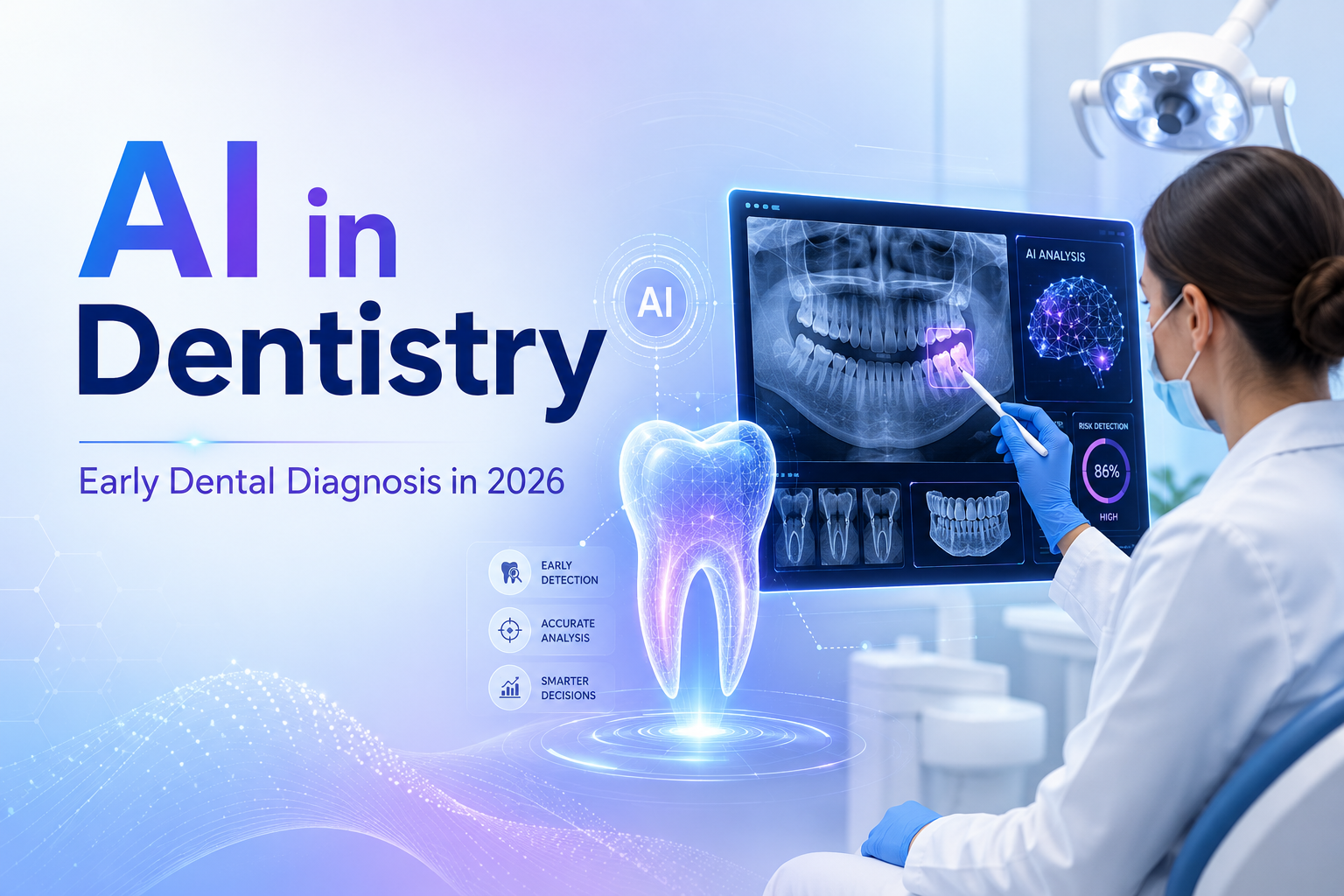
The dental industry is currently undergoing one of the most significant technological transformations in its history. Artificial intelligence (AI), once considered a futuristic concept, is rapidly becoming an essential component of modern dental practice. As we approach 2026, AI-powered diagnostic tools are helping dental professionals improve clinical accuracy, streamline workflows, and enhance the patient experience.
The integration of Dental AI is not intended to replace dentists, but rather to equip dental professionals with advanced tools that facilitate better decision-making and the early detection of disease. From analyzing dental images in seconds to conducting oral examinations using smartphones, AI is transforming the way oral healthcare is delivered worldwide.
As preventive dentistry continues to gain importance, AI technology is proving to be one of the most valuable innovations in helping dental professionals identify oral health problems before they worsen and become costly to treat.
Oral health problems often develop gradually. Conditions such as cavities, gingivitis, periodontitis, and mouth sores may be asymptomatic or present with few symptoms in their early stages. Many patients delay seeking dental care until they experience pain or discomfort, at which point treatment may be more invasive and expensive.
Early diagnosis remains one of the most effective ways to improve oral health. Detecting dental problems early allows professionals to intervene more quickly, often preventing complications and reducing treatment costs.
Unfortunately, early detection has long relied on regular dental checkups and the dentist's ability to identify subtle warning signs. While experienced dentists remain highly skilled in diagnosis, artificial intelligence (AI) now offers additional support that improves the accuracy and reliability of diagnoses.
This evolution allows dentistry to shift from a reactive treatment model to a proactive, prevention-focused approach.
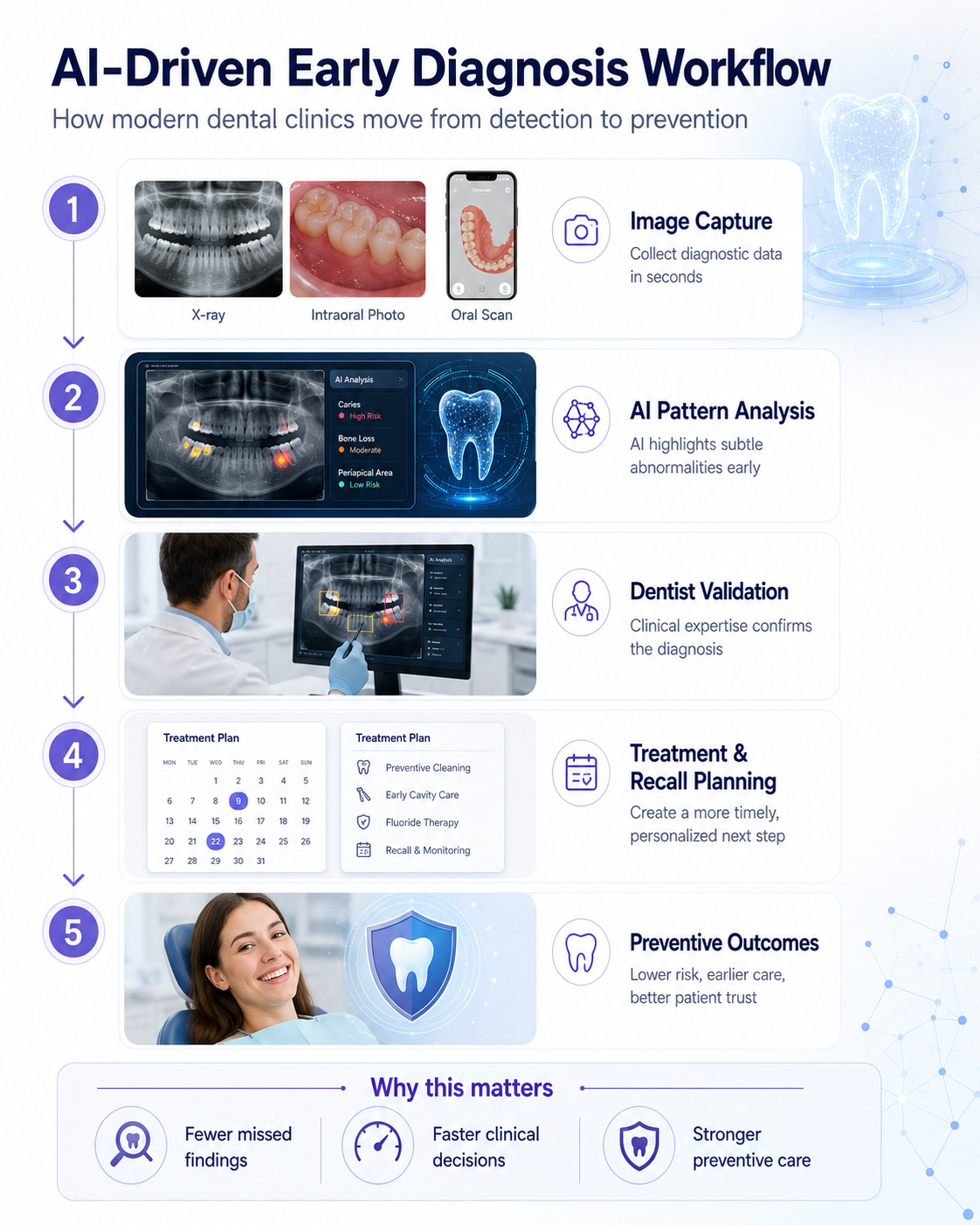
In addition, the rise of dental diagnostics through AI is one of the most promising advances in AI applied to dentistry in 2026. This is the rapid development of AI-based diagnostic systems.
These systems use machine learning algorithms trained on thousands, even millions, of dental images and clinical records. By recognizing patterns associated with specific oral conditions, AI can help dental professionals quickly and accurately identify abnormalities at an early stage.
Currently, AI tools can detect:
The ability to process large amounts of diagnostic data in seconds helps practitioners make more informed decisions and reduces the risk of overlooking abnormalities.
Secondly, faster AI image analysis improves clinical efficiency. Traditionally, dentists manually review radiographs, intraoral photographs, and clinical observations, which can be time-consuming. In 2026, AI-assisted image analysis will significantly improve efficiency.
Advanced AI in dentistry systems can analyze images almost instantly and highlight areas of interest for further examination by the practitioner. This reduces the time spent on routine image interpretation, allowing dentists to focus more on patient care and treatment planning. Faster image analysis also benefits patients by reducing wait times and accelerating the diagnostic process. For busy dental clinics, increased efficiency translates into better workflow management and greater patient satisfaction.
Moreso, accuracy remains a critical aspect of any diagnostic process. More accurate detection can be achieved by artificial intelligence. AI does not replace clinical expertise, but it provides valuable support by identifying patterns that are sometimes difficult to detect with the naked eye.
In conclusion, artificial intelligence is rapidly transforming dentistry by 2026. From faster image analysis and more accurate early detection to smartphone-based oral exams and support for preventative care, AI is helping dental professionals improve diagnosis and patient outcomes.
Modern dentistry is increasingly digital, data-driven, and focused on prevention. By embracing the innovation enabled by AI, dental clinics can improve efficiency, expand access to care, and deliver a better patient experience. As technology continues to advance, one thing is clear: AI is not replacing dentists, but empowering them to provide smarter and more effective oral care than ever before.
Kingsley Obiakor is a HealthTech and AI Writer who explores how emerging technologies are transforming healthcare delivery, patient outcomes, and digital innovation. With a background in Biology and technology, he creates research-driven content on artificial intelligence, digital health, telemedicine, health data analytics, and medical innovation. His work helps healthcare professionals, innovators, and decision- makers understand complex technologies and their real-world impact on the future of healthcare.