
Dentists are practical people: you want to know what saves chair time, helps you find problems sooner, and boosts case acceptance without stressing your team. In the past few years, a handful of commercial AI products have delivered measurable results to clinics and DSOs. In this section, I'll walk through accessible, real-world case studies and practical takeaways for clinic owners looking for the Best AI Dental Software for their practice.
AI in dentistry is not about replacing the dentist-it's about making routine tasks faster and clearer so your clinical judgment can focus where it matters. When clinics choose the Best AI Dental Software, they commonly expect three outcomes: faster radiograph review, more consistent detection of disease, and smoother patient conversations that increase treatment acceptance. Multiple vendors now show concrete results in these areas.
A medium-sized dental clinic, within the scanO AI ecosystem, wanted to improve patient management and follow-up care by implementing scanO Engage. Centralizing patient records, scan images, appointment history, and treatment plans in one place helps reduce paperwork and coordination errors. Automatic reminders for recalls, hygiene visits, and pending treatments lead to a clear drop in no-shows and better follow-up compliance.
In weeks, the team noticed smoother chairside communication because dentists could access complete records instantly, which in turn allowed them to explain findings more confidently. This combination of better workflow and higher patient retention helped the clinic operate more efficiently while offering more consistent care-showing why scanO's ecosystem is increasingly viewed as part of the Best AI Dental Software options for the modern practice.
What they did: An FDA-cleared AI radiograph assistant was implemented chairside in a mid-size general practice to annotate bitewings and periapicals in real time.
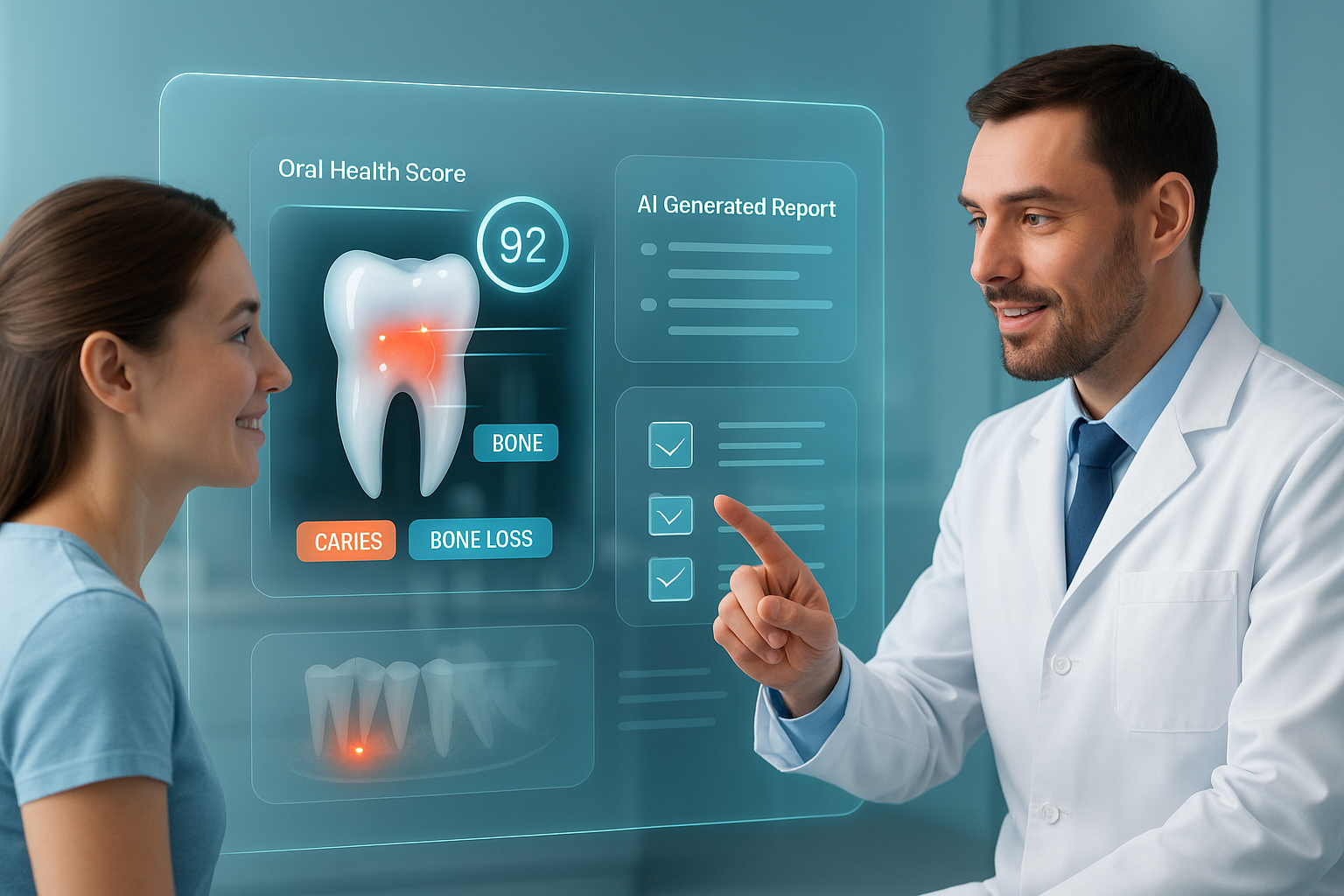
What changed: Radiograph interpretation time was significantly reduced; clinicians used annotated images during the hygiene exam to clearly explain findings. The clinic experienced fewer follow-up calls, and charting was faster, freeing operator time for additional patients or focused procedures.
Why it matters: Faster, clearer radiograph reads directly lead to more efficient appointments and higher clinician confidence when presenting treatment. Overjet's published metrics from clinical use demonstrate measurable time savings and clearer patient visuals that help case acceptance.
Practical takeaway: If you're evaluating the Best AI Dental Software for diagnostics, prioritize solutions that integrate with your imaging system and provide immediate, annotated visuals at the chair - that's where most practices see operational gains.
What they did: A multi-site dental organization introduced real-time AI performing image analysis, chart auditing support, and case-presentation tools across many clinics.
What changed: Sites adopting the tool reported increased disease detection rates and greater per-patient production. Published vendor materials and third-party writeups indicate increased detection of diseases and a significant surge in case acceptance as well as production metrics following its adoption.
Practical takeaway: For DSOs or multi-clinic owners seeking the Best AI Dental Software, look for enterprise features like analytics dashboards, centralized auditing, and training support. Those are some of the aspects driving consistency and faster scaling across locations.
What they did: An orthodontic practice adopted a remote monitoring platform incorporating AI that monitors tooth movement and patient compliance in between visits.
What changed: The clinical studies and practice reports indicate that the platform reduced in-office visits per case and kept treatment on track by catching issues earlier. For busy clinics, reduced routine visits free appointment slots for new patients or revenue-generating procedures.
Practical takeaway: If your workflow includes aligner or active orthodontic cases, the Best AI Dental Software for you may be a remote-monitoring tool that lowers routine visit load and increases patient satisfaction.
What they did: A national network deployed AI diagnostics and workflow tools to hundreds to thousands of practices to standardize and surface missed disease consistently.
What's different: Published rollout notes indicate that the AI assistant improved consistency in detection and supported faster claims and documentation processes that helped revenue integrity and reduced administrative rework for clinics. Enterprise rollouts also highlighted training and change management as key success factors.
Practical takeaway: Enterprise deployments show the Best AI Dental Software for scale isn't just the algorithm; it's the vendor's implementation playbook: onboarding speed, integration with your PM, and analytics to help measure ROI.
Indeed, multiple vendor reports, along with independent studies, show that AI increases the detection rates of caries and bone loss and improves consistency among clinicians.
Remote monitoring platforms reduce unnecessary office visits in orthodontics and maintain treatment quality.
Time savings in image interpretation and charting amount to real capacity gains for the practices using AI chairside.
Clinical fit: Does the AI address your biggest bottleneck, x-ray reading, case presentation, or remote monitoring? Select the product focused on that problem.
Integration: Does it integrate with your imaging and practice management systems? Seamless integration is non-negotiable if gains are to show up in daily workflow.
Evidence: Look for FDA clearance (when applicable), or peer-reviewed studies and case studies from a vendor that are related to clinic metrics.
Change management: Vendor training, rollout speed, and clinical champions inside the practice are what turn pilot wins into sustained growth.
ROI measurement: Agree on metrics up front- minutes saved per patient, per-patient production, reduction in recalls-and measure them during the pilot.
"Will AI make me less relevant?" The answer is no, as AI amplifies consistent detection and frees time for treatment planning where your expertise is needed.
“Is the data safe?” Vendors you can trust operate according to medical data security standards; request their compliance documentation.
“Will patients trust AI?” When the outputs of AI are presented in clear visuals (annotated x-rays, overlays), patients tend to understand findings better; this improves acceptance.
Choose one of the clinical goals: reduce radiograph read time, increase case acceptance, or reduce orthodontic recalls. Run a short pilot with the chosen Best AI Dental Software over 30–60 days
Tracking simple metrics: minutes per appointment, recommended treatments accepted, and number of recall visits.
Review and scale only if measurable gains are shown by the pilot and staff are comfortable with the workflow.
AI in dentistry is already creating results in terms of efficiency, detection, and patient communications that are quite measurable. Those clinics that choose the Best AI Dental Software with clear objectives, integration readiness, and a sensible pilot plan will be able to grow faster without compromising the quality of care. I'd be happy to help you draft a one-month pilot plan tailored for your clinic's top bottleneck diagnostics, case acceptance, or monitoring and suggest vendor-specific metrics to track, if you'd like.