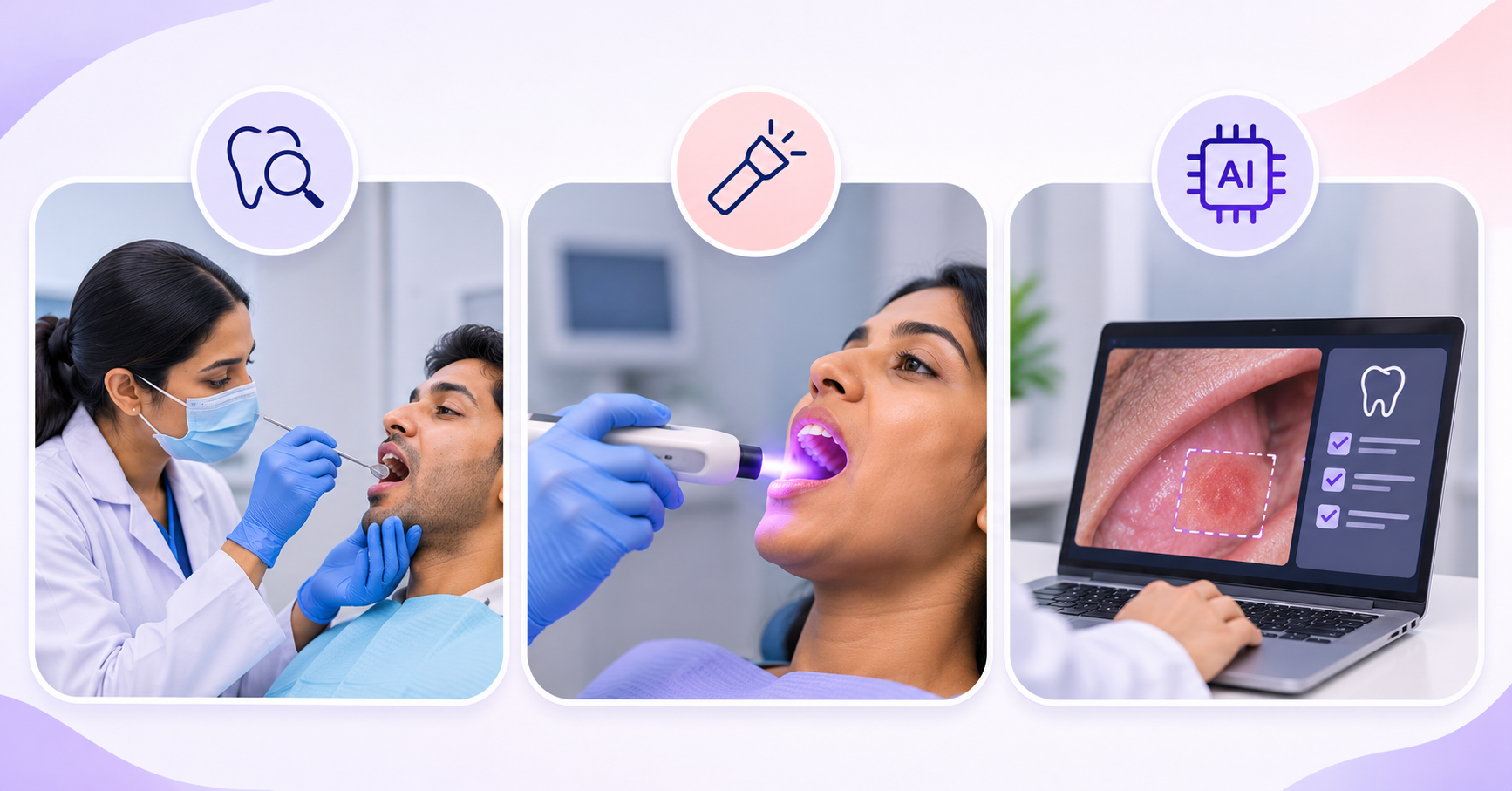



Quick answer: Oral cancer screening guidelines in India distinguish population programmes from an individual clinical examination. NP-NCD provides a public screening and referral pathway. A private dentist still assesses the person in front of them, documents findings and arranges appropriate referral. Programme age criteria are not a reason to dismiss a symptomatic younger patient.
The practical challenge is often the handover. A patient may arrive with a camp slip, leave with a private referral and then be unsure where to go. The clinic's contribution is to make that transition explicit: who examines, who confirms the diagnosis, who provides treatment and who follows up.

Government materials describe population screening of adults aged 30 years and above. An official NHM Maharashtra programme description explains a staged pathway linking community assessment, primary care and higher facilities. Local implementation and receiving services should be confirmed with the relevant district team.
Do not turn a population threshold into a universal clinical rule. Symptoms, history or a concerning finding require individual assessment. Equally, a private clinic should not imply that buying a screening device makes it an authorised government screening centre or grants access to a government portal.
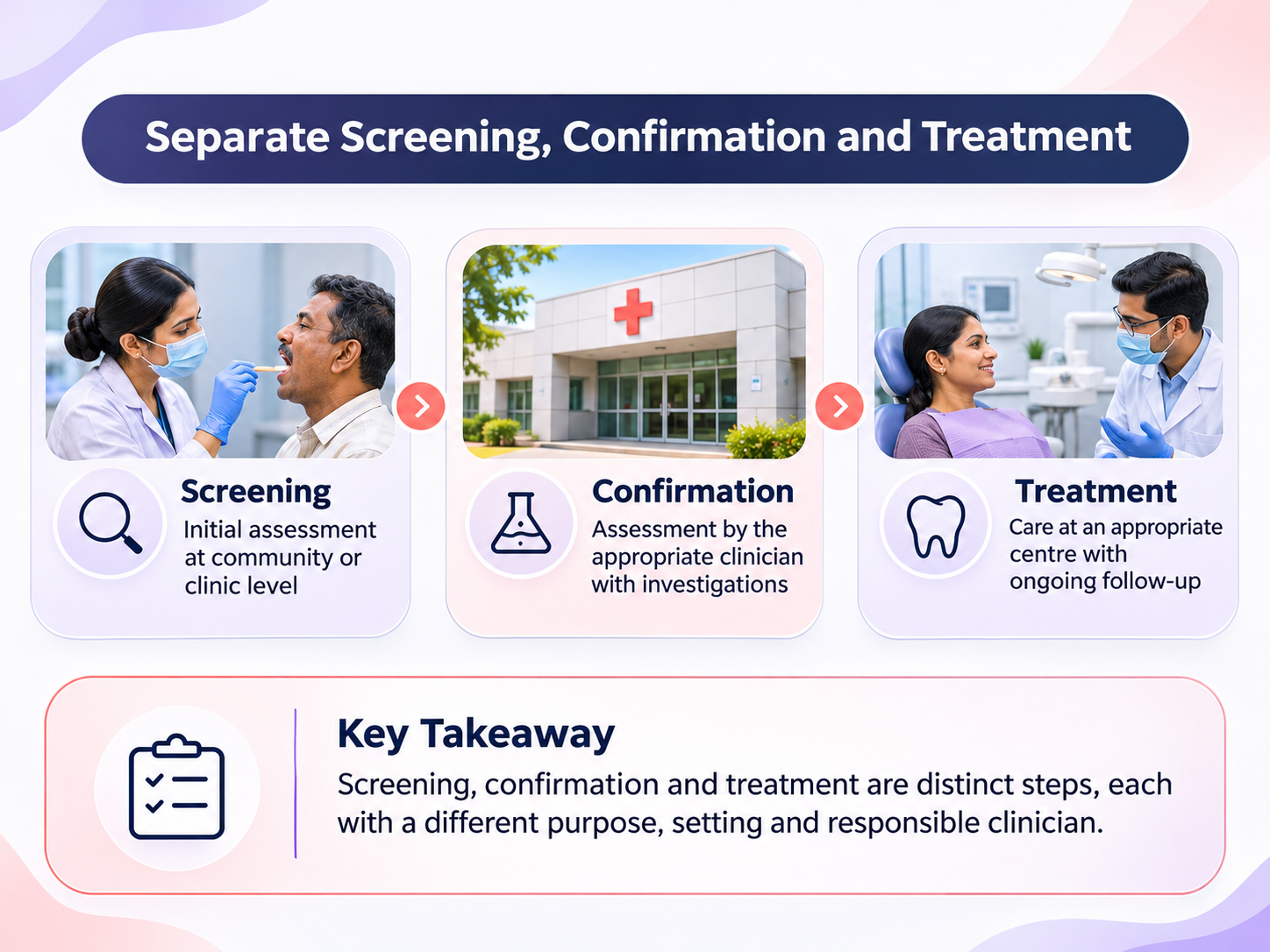
Screening is an initial assessment. Confirmation requires the appropriate clinician and investigations; histopathology may be needed. Treatment depends on the confirmed condition and service pathway. These are different stages, with different responsibilities and different records.
Explain the distinction before giving a referral. A patient told only that the screening was positive may assume cancer has already been diagnosed. Use specific language: an area needs further assessment, the examination cannot establish its nature, and the receiving specialist will advise on the next investigation.
List the public and private services that can assess oral mucosal findings in your locality. Confirm the department, appointment process, opening days, contact route and information required. Check whether patients need a referral letter, identity documents or prior reports. Avoid promising eligibility or free services until the receiving facility confirms them.
A useful referral map includes an alternative service. A single contact may be unavailable, on leave or unable to accept an appointment quickly. The referral owner should know how to escalate a failed handover to the dentist rather than leave the patient in an unanswered message thread.
At registration, ask whether the patient has an earlier screening record and obtain permission to use it. At examination, assess the clinical concern rather than copying the earlier classification uncritically. At handover, provide a legible summary of the finding and the question for the receiving clinician.
With consent, request the outcome needed for continuing care. This is different from collecting the patient's complete oncology record for marketing. Store only what is necessary for the clinical purpose and restrict access to staff who need it.
A community organiser may know that a patient attended but should not automatically receive clinical details. Agree in advance what aggregate information will be shared. For example, a partner may receive counts of people screened and referrals offered, while the clinic separately holds identifiable findings and contact permissions.
The dentist should determine how promptly a finding needs review. The coordinator manages logistics and records attempts to reach the person. If contact fails, document it and seek clinical direction. A spreadsheet entry labelled complete should mean the defined handover was completed, not simply that one call was made.
National screening totals change and do not measure the performance of a particular device. Do not attach a government screening figure to scanO's product or imply endorsement. Where a statistic is useful, state the reporting period, programme, denominator and official source. This guide deliberately avoids repeating an undated cumulative total.
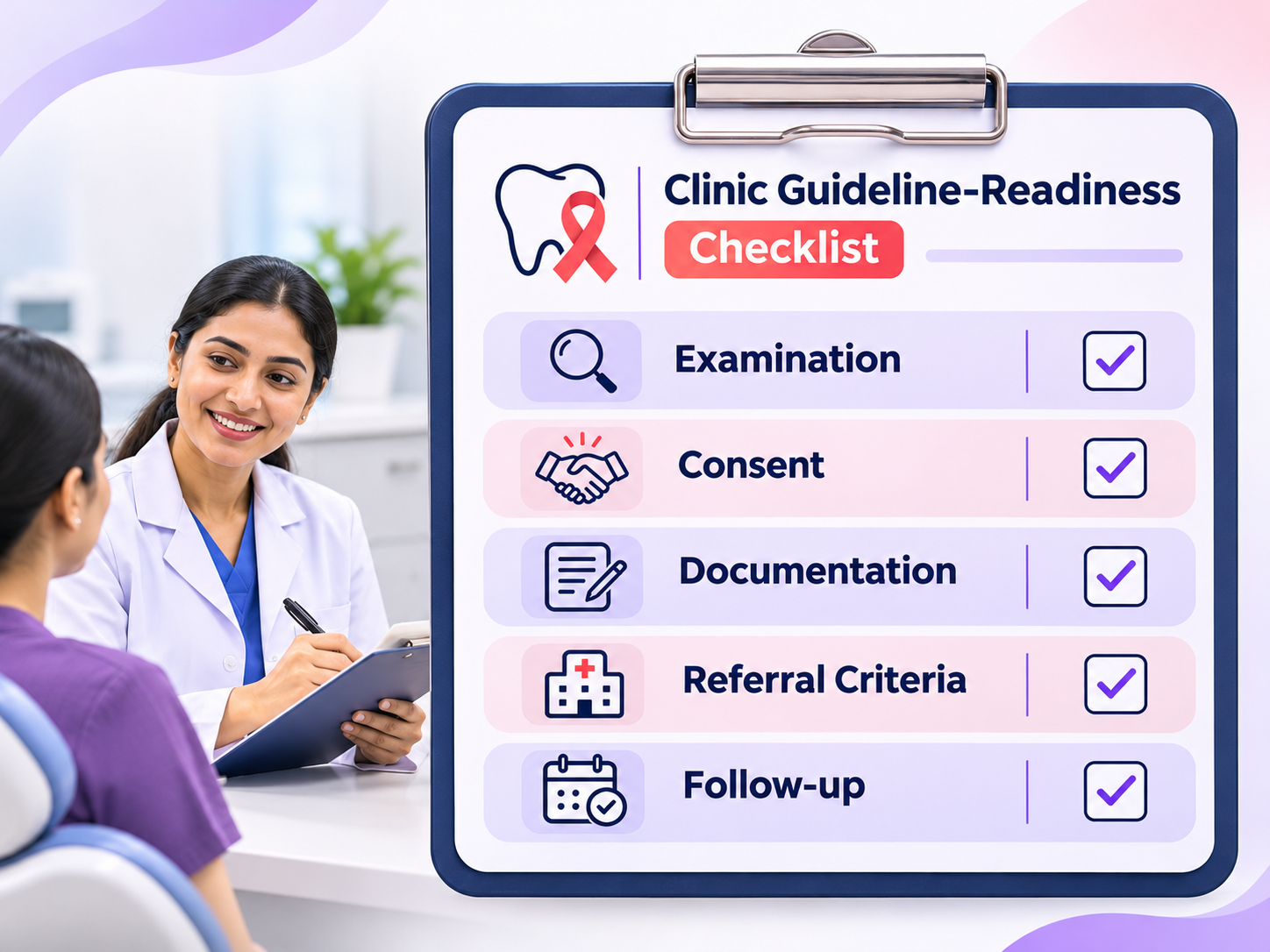
Choose one referral coordinator, verify the local receiving service and agree a standard letter. Review the first few cases for missing contact details, vague descriptions or unconfirmed appointments. Improve the handover before expanding a camp programme.
For day-to-day examination documentation, use the seven-step chairside protocol. For general event logistics, see the dental camp planning guide.
An informal relationship between two clinicians can be helpful, but the operational details still need recording. Agree what the referring clinic will send, what the receiving service needs and how the clinic can confirm that the patient has reached the appropriate assessment. Keep the agreement focused on continuity of care rather than exchanging promotional referrals.
The receiving service may have a booking process that changes by department or day. Record the details that matter to the patient: where to attend, how to request an appointment and what documents to bring. If the clinic cannot verify a service's charges or eligibility conditions, say that the patient should confirm them rather than making a promise on its behalf.
Review the pathway whenever an event is planned in another district. A referral route that works near the clinic may be impractical for someone who lives several hours away. Ask the person about access barriers and consider appropriate local services under the examining clinician's direction. Do not assume that every referral must return to the organising clinic.
For an internal review, distinguish invited, registered, examined, referred and known to have attended the receiving service. Each count answers a different question. If outcome information is unavailable, report unknown rather than treating missing information as either success or refusal. Label the reporting period and the scope of the event.
An illustrative event might have 60 registrations, 48 completed examinations and six referrals offered. Those are fictional counts used to show the reporting structure. They do not imply that the other twelve people had normal examinations or that all six referrals reached care. The next operational question is what happened to each incomplete encounter or handover.
Use aggregated reporting for organisers whenever it meets their legitimate purpose. Keep identifiable records in the clinical process with appropriate access. If the partner requests named details, ask the responsible clinician and data adviser to assess the request before sharing. Clear reporting protects both patient trust and the usefulness of the programme's own results.
Community-based oral health screening programmes and private dental clinics may follow different referral processes, but both require clear documentation, appropriate clinical assessment and reliable follow-up. AI-powered oral health screening solutions such as scanO Air can support initial screening and visual documentation of oral health concerns in clinics and outreach settings. However, screening findings require professional interpretation and should not replace clinical diagnosis or specialist assessment.
Local service verification card: Record the facility, department, person contacted, verification date, booking method, required documents, indicative access barriers reported by the facility, alternative service and designated clinic referral owner. Recheck contact details before each outreach event.
Operational check: Keep the original observation, responsible decision-maker and next action connected throughout the referral process. Where tools such as scanO Air support initial screening, ensure that their findings are documented separately from confirmed clinical diagnoses. Review unresolved referrals explicitly, and never treat a missing response as evidence that the recommended assessment or treatment has been completed.
For further practical context, see AI dental screening workflows. These resources support planning; adapt decisions to your clinic and review clinical requirements with qualified professionals.