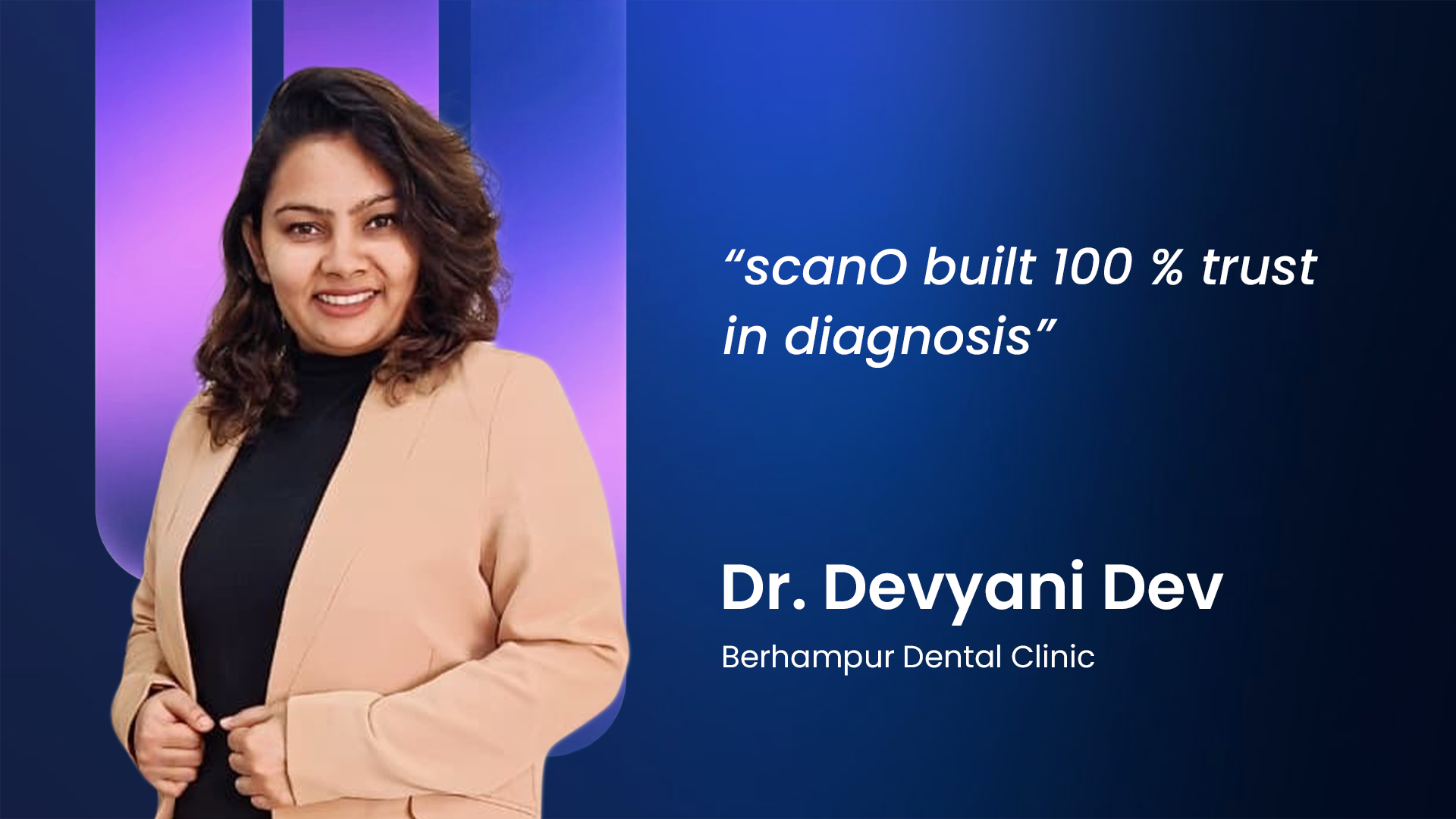
.png)








Before adopting scanO, assistant doctors performed charting, took findings, and used intraoral cameras and scanners. Dr. Krisshna Kumar would then step in to provide the final diagnosis and consultation.
He previously relied on assistant doctors for primary evaluations before stepping in himself. Animated videos were often used to explain oral problems, but now those are no longer necessary, scanO makes everything self-explanatory.
The device is placed in the diagnostic area near the waiting room, so by the time the patient enters the consultation room, most of the diagnostic work is already complete.
Dr. Krisshna first heard about scanO through an Instagram ad. He did his own research, took a live demo, saw the device in action at the Chennai conference, and decided to purchase it.
Being part of the first NABH-accredited dental clinic in Kerala, he has always led with innovation, from ISO and IDA’s Clinical Accreditation Network (CAN) certifications to award-winning standards.
We’ve never advertised our clinic- it’s all word of mouth. To maintain that reputation, we must keep upgrading. scanO felt like the right step to stay ahead and show patients something truly different.
He primarily uses the scanning robot and WhatsApp report features and continues to use Bestosys as his primary PMS for documentation.
While he acknowledges that some minor AI errors occur, for instance, slight attrition sometimes triggering a “night guard required” alert , he handles it by balancing AI and human judgment:
Features like Navi (AI assistant) have also made a strong impact:
Assistant doctors now review scanO’s WhatsApp reports and present them to patients before Dr. Krisshna meets them.
The overall time per diagnosis has been cut in half, significantly improving daily flow.
Initially, the scanO AIR was placed in the waiting area, but patients, especially women from certain communities felt uncomfortable opening their mouths in public. Moving it to a private area made a remarkable difference in participation.
He also insists on scanning only registered, paying patients rather than offering it free:
This approach has led to stronger engagement and commitment from patients.
Patients including international ones from the UK, USA, Australia, and Southeast Asia are consistently amazed by the technology.
“Many patients in their 40s, 50s, or 60s used to feel self-conscious about irregular or protruded teeth but never acted on it. Once scanO flagged it, they finally decided to go for aligners or orthodontic treatments. They said, ‘Yes, the machine told us and I’ve always known it’s true.’ "
.png)
.png)
.png)


.png)
.png)



.png)


.png)

.png)
.png)